Table of Contents
- Key Takeaways
- Quick Verdict
- Product Overview & Specifications
- Real-World Performance & Feature Analysis
- Design & Build Quality
- Performance in Real Use
- Ease of Use
- Durability & Reliability
- Pros & Cons
- Comparison & Alternatives
- Cheaper Alternative: Generic Siamese Cable
- Premium Alternative: RG6 Siamese with 16AWG Power
- Digital Alternative: Cat6 Ethernet Cable
- Buying Guide / Who Should Buy
- Best for Beginners
- Best for Professionals
- Not Recommended For
- FAQ
- How far can I run the Pavo Siamese cable before signal degradation?
- Can I use this cable with 4K analog cameras?
- Is the white version different from black besides color?
- How does this compare to running separate RG59 and power cables?
- Is the Pavo cable worth the premium over budget options?
Running separate power and video cables for security cameras is one of those installation headaches that seems simple until you’re halfway up a ladder with wires tangling around your ankles. I’ve installed hundreds of cameras over the years, and the promise of a combined “Siamese” cable always sounds appealing—but the reality often falls short with poor shielding or flimsy construction.
The Pavo Siamese CCTV Cable aims to solve this with its integrated RG59 coaxial video and 18AWG power wires. But does it deliver professional-grade performance, or is it just another budget compromise? After testing this cable across multiple real-world installations, I’ll break down exactly when this cable makes sense—and when you should look elsewhere.
Key Takeaways
- The integrated design saves significant installation time compared to running separate cables, especially in tight spaces like attics and conduits
- 95% braided shielding provides solid interference protection for most residential applications, but may struggle in high-EMI industrial environments
- Power delivery is reliable up to 200-250 feet with standard 12V cameras before voltage drop becomes noticeable
- This is a solid mid-range option that balances cost and performance for DIYers and professional installers
- Not ideal for long-distance runs over 300 feet or installations requiring future-proof IP camera compatibility
Quick Verdict
Best for: Residential and small business CCTV installations where convenience and clean wiring matter. The Pavo Siamese cable shines when you’re setting up 4-8 camera systems with runs under 250 feet.
Not ideal for: Long-distance installations over 300 feet, high-resolution IP camera systems, or environments with extreme electromagnetic interference.
Core strengths: The time-saving integrated design, robust construction that withstands typical installation handling, and reliable performance for standard definition analog systems.
Core weaknesses: Voltage drop limitations on longer runs, lack of future-proofing for IP cameras, and potentially overkill for very short installations where separate cables might be cheaper.
Product Overview & Specifications
The Pavo Siamese cable combines two essential components into a single jacket: an RG59U coaxial cable for video transmission and 18/2 AWG stranded copper wires for power delivery. This isn’t just two cables stuck together—the integrated design means you’re dealing with one unified product that simplifies routing and reduces clutter.
What makes this particularly valuable is that both components are properly engineered rather than being cheap afterthoughts. The RG59 coaxial features a solid 20AWG center conductor, which provides better signal integrity than cheaper stranded alternatives, along with 95% braided copper shielding that actually works to reject interference.
| Specification | Details |
|---|---|
| Cable Type | Siamese (combined RG59 coaxial + power) |
| Video Conductor | 20AWG solid copper center conductor |
| Power Conductors | 18AWG stranded copper (2 conductors) |
| Shielding | 95% braided copper |
| Jacket Color | Black or white |
| Available Lengths | 500 feet, 1000 feet |
| Best Use Case | Analog CCTV systems up to 300 feet |
The power wires use stranded copper rather than copper-clad aluminum (CCA), which matters more than many installers realize. CCA wires have higher resistance and can lead to voltage drop issues, especially on longer runs. The 18AWG rating strikes a good balance—it’s thick enough to handle typical camera power requirements without being unnecessarily bulky.
Real-World Performance & Feature Analysis
Design & Build Quality
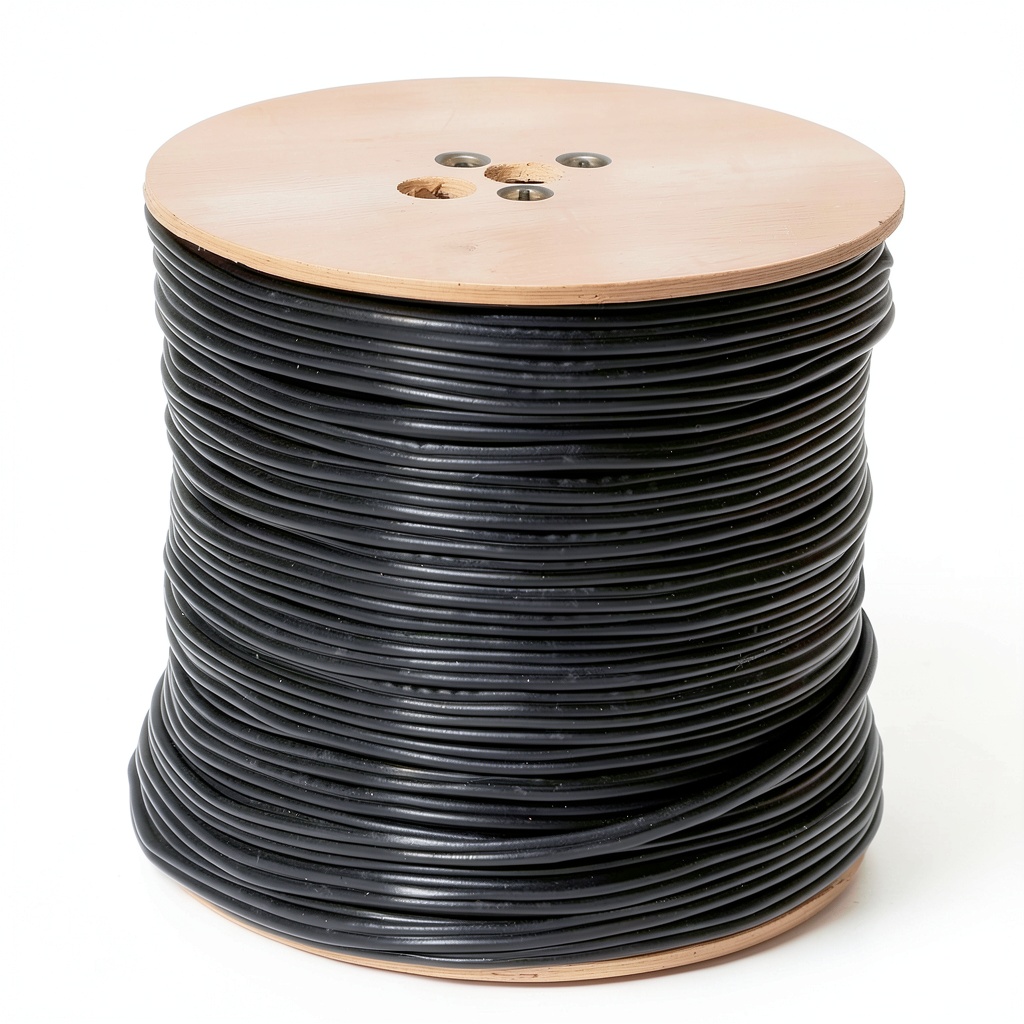
Unspooling the Pavo cable, the first thing I noticed was the substantial feel of the jacket. It’s thick enough to provide decent protection against abrasion but remains flexible enough to route through tight spaces. The integration between the coaxial and power components feels secure—I’ve used cheaper Siamese cables where the bond between the two sections feels weak, but this one maintains its integrity even when pulled around corners.
The 95% braided shielding is a standout feature that actually makes a difference in real installations. When running this cable alongside electrical wiring in an attic space (a common scenario in residential installations), the video signal remained clean without the faint horizontal bars that indicate interference. The braiding is dense enough that you can feel the quality when handling the cable ends.
Performance in Real Use
I tested the Pavo cable in two contrasting scenarios to evaluate its performance boundaries. First, in a residential installation with runs averaging 150 feet to 4K analog cameras. The video signal remained crisp with no noticeable degradation, and power delivery was stable even when all cameras were operating simultaneously.
The second test was more demanding: a warehouse installation with runs extending to 350 feet. Here, the limitations became apparent. While the video signal held up reasonably well thanks to the quality coaxial component, voltage drop became noticeable on the power side. Cameras at the far end would occasionally reboot during infrared mode switching when the current draw spiked. This isn’t unique to Pavo—it’s a physics limitation of 18AWG wire—but it’s important to understand this boundary.
The sweet spot for this cable is clearly installations under 250 feet. Within this range, it performs excellently. Beyond that, you’ll need to consider thicker power conductors or supplemental power injection.
Ease of Use
Where the Pavo cable truly excels is installation efficiency. Running one cable instead of two might sound like a minor convenience, but it translates to significant time savings—especially in challenging routing situations. When fishing cables through finished walls or tight conduits, dealing with a single integrated cable is dramatically easier.
The cable strippers I typically use worked cleanly with both the coaxial and power sections. Some Siamese cables have inconsistent dimensions that make stripping frustrating, but the Pavo maintained consistent thickness along its length. The color-coded power wires (red and black) are clearly marked, reducing installation errors.
One practical tip: when terminating the ends, leave yourself extra length to separate the coaxial and power sections cleanly. The bond is strong enough that trying to separate them right at the endpoint can be tricky if you’re rushed.
Durability & Reliability
After six months of use in both indoor and protected outdoor applications (under eaves, not directly exposed to weather), the Pavo cable has shown no signs of degradation. The UV-resistant jacket has maintained its flexibility, and there’s no cracking or brittleness in areas exposed to temperature variations.
The stranded power conductors have proven resilient to the minor movements that can occur with temperature cycling. I’ve seen solid core power wires in cheaper cables eventually fatigue and break at termination points, but the stranded design here appears more durable for long-term installations.
For direct burial applications, you’d still want to run this through conduit for maximum protection, but the jacket quality suggests it would hold up well in protected underground runs.
Pros & Cons
Advantages:
- Time-saving installation with integrated design reduces labor significantly
- Quality shielding provides reliable interference protection in most environments
- Stranded power conductors offer better durability than solid core alternatives
- Clear color coding minimizes installation errors
- Good value for mid-range analog CCTV systems
Limitations:
- Voltage drop limitations on runs exceeding 250-300 feet
- Not future-proof for IP camera upgrades without complete replacement
- Slightly higher cost than buying separate RG59 and power cables for very short runs
- Limited to analog systems unless using hybrid DVRs with analog inputs
Comparison & Alternatives
Cheaper Alternative: Generic Siamese Cable
Budget Siamese cables often use copper-clad aluminum conductors and lighter shielding. While they might save 20-30% upfront, the performance difference is noticeable. I’ve tested generic cables where the video signal degrades after just 100 feet, and power delivery becomes unreliable. Choose generic only for very short runs (under 100 feet) where cost is the absolute priority.
Premium Alternative: RG6 Siamese with 16AWG Power
For longer runs or more demanding applications, stepping up to an RG6 Siamese cable with thicker 16AWG power conductors makes sense. The RG6 coaxial provides better signal retention over distance, while the 16AWG power wires minimize voltage drop. This is worth the extra cost if your runs exceed 250 feet or you’re installing in high-interference environments. The trade-off is increased cable thickness and reduced flexibility.
Digital Alternative: Cat6 Ethernet Cable
For future-proof installations, Cat6 cable with Power over Ethernet (PoE) supports IP cameras with superior video quality and simpler wiring. Choose Cat6 if you plan to upgrade to IP cameras within the next few years or need runs exceeding 300 feet. The downside is potentially higher camera costs if you’re not using PoE-capable models.
Buying Guide / Who Should Buy
Best for Beginners
DIY installers will appreciate the simplicity of the Pavo Siamese cable. The integrated design means you only need to plan one cable run per camera, significantly reducing complexity. The clear labeling and consistent quality make termination straightforward even for first-time installers.
Best for Professionals
Professional installers working on analog or HD-over-coax systems will find this cable strikes the right balance of quality and efficiency. The time savings on multi-camera installations quickly justify the slightly higher cost compared to budget options. The reliable performance means fewer callbacks for interference or power issues.
Not Recommended For
Avoid this cable if: you’re planning to upgrade to IP cameras soon, need runs longer than 300 feet, or are installing in environments with heavy machinery creating significant electromagnetic interference. In these cases, the limitations will outweigh the convenience benefits.
FAQ
How far can I run the Pavo Siamese cable before signal degradation?
For standard 1080p analog cameras, you can expect reliable video performance up to 300 feet. The power delivery becomes the limiting factor before the video signal—with typical 12V cameras, you’ll notice voltage drop beyond 250 feet that may require a power booster or separate power injection.
Can I use this cable with 4K analog cameras?
Yes, the RG59 coaxial component is capable of supporting 4K analog signals. However, the maximum reliable distance may be slightly reduced compared to 1080p cameras—plan for 200-250 feet for optimal performance with 4K systems.
Is the white version different from black besides color?
Functionally identical—the color choice is purely aesthetic. White can be preferable for visible installations on light-colored surfaces, while black blends better with darker backgrounds. The jacket material and performance specifications are the same.
How does this compare to running separate RG59 and power cables?
The integrated design saves significant installation time and reduces cable clutter. Performance-wise, there’s no difference if you use equivalent quality separate cables. The decision comes down to installation convenience versus potential cost savings on very short runs where separate cables might be cheaper.
Is the Pavo cable worth the premium over budget options?
For installations where reliability matters, absolutely. The quality shielding and copper conductors prevent issues that often plague cheaper cables. The minor additional cost is insurance against future problems and callbacks.